What Is Blow-In Insulation and Why Use It?
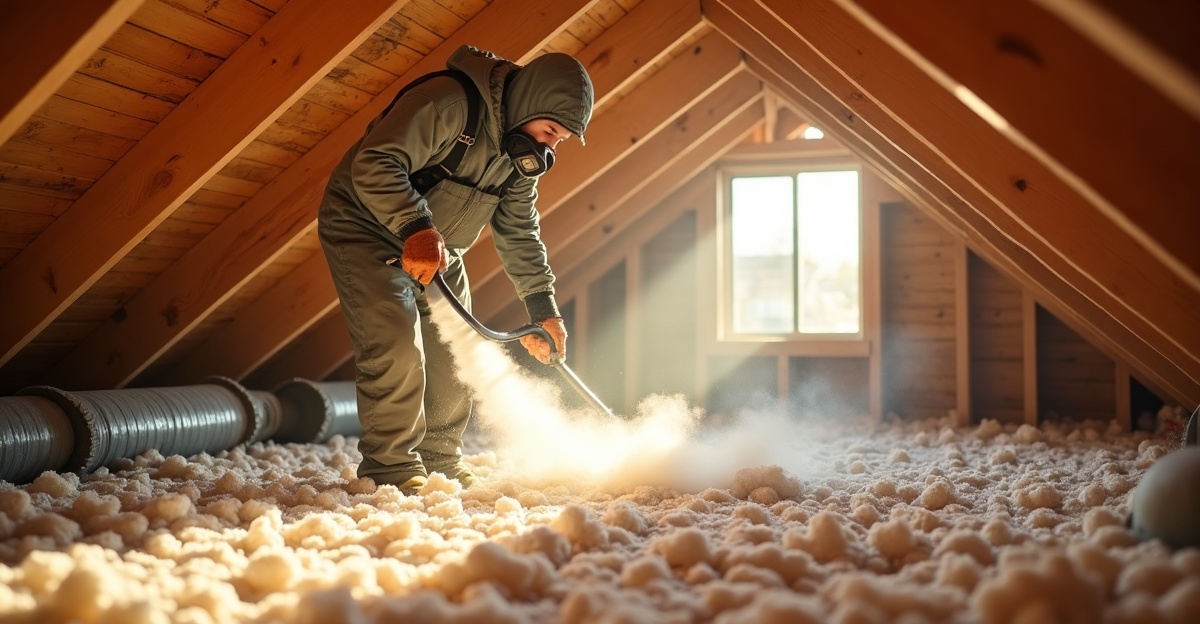
Understanding what blow-in insulation is helps us make informed decisions about attic performance, especially in hot climates like Arizona where extreme attic heat drives up cooling costs and strains HVAC systems. We use blow-in insulation as a loose-fill material installed with a blowing machine to create consistent attic coverage, increase R-value, and reduce heat transfer into living spaces. This approach supports stronger comfort and better energy efficiency year-round.
Key Takeaways
- Blow-in insulation uses loose-fill fiberglass or cellulose installed by machine to create even coverage across attic floors and hard-to-reach areas.
- Increasing insulation depth raises R-value, which slows heat transfer and improves indoor comfort in high-heat climates.
- Proper installation includes even distribution, ventilation clearance, air sealing, and planning for settling to maintain long-term performance.
- Cellulose and fiberglass each offer advantages, and performance depends more on correct depth and installation quality than material alone.
- Blow-in insulation works best in properly ventilated attics without active moisture or structural issues.
How Blow-In Insulation Improves Comfort and Energy Performance in Arizona Homes
Arizona attics reach extreme temperatures for much of the year. That heat pushes down into living areas, drives up cooling costs, and forces HVAC systems to run longer than necessary.
High attic heat loads are a common issue in local homes and light commercial buildings. Ductwork and air handlers often sit in unconditioned attic spaces, where summer temperatures soar. If cooling bills spike each summer, or certain rooms feel warmer than others, insulation and attic heat gain are usually part of the problem.
Blow-in insulation helps slow that heat transfer. By increasing the thermal barrier between the attic and conditioned space, it reduces heat flow from superheated attic air into ceilings and rooms below. HVAC equipment and ducts also benefit. With better attic coverage, less heat surrounds the system, which improves operating efficiency and overall comfort.
Uneven indoor temperatures often trace back to weak or aging attic insulation. If the attic has uneven or compressed insulation, gaps form across the attic floor. Those gaps allow heat to flow more freely into the home. Upgrading with blow-in insulation restores consistent coverage and helps stabilize indoor conditions.
We often recommend it during attic upgrades because it delivers practical results. It improves comfort, supports HVAC performance, and strengthens overall energy efficiency without overcomplicating the project.
What Blow-In Insulation Is and How It Works
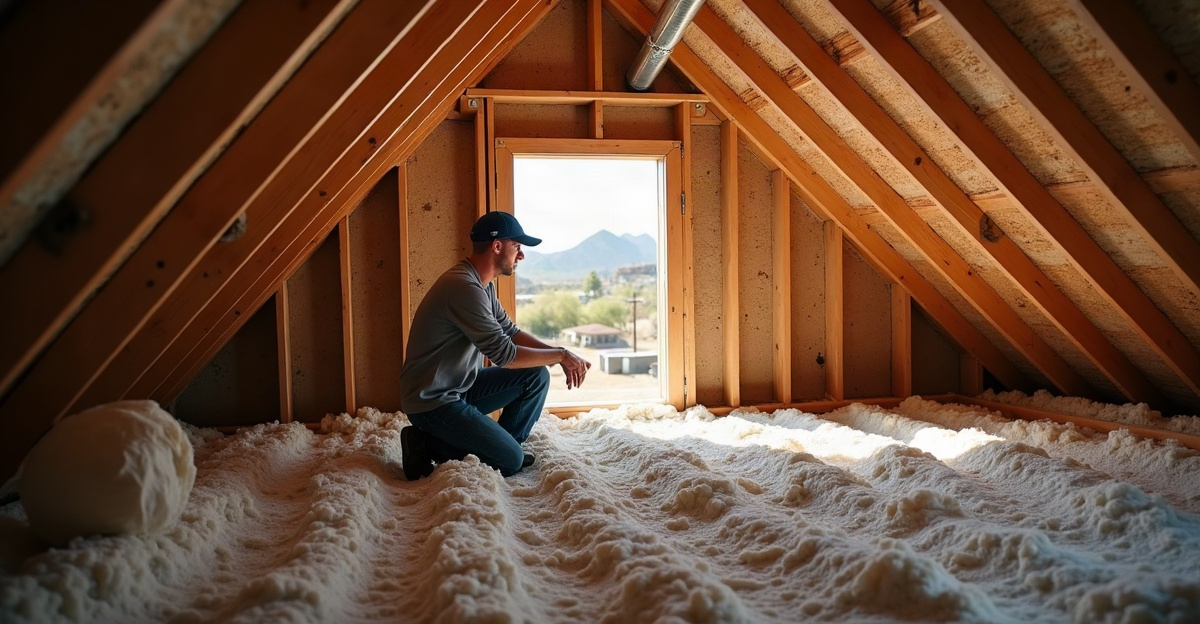
Blow-in insulation, also called loose-fill insulation, is made from small particles of fiberglass or cellulose. We install it using a specialized blowing machine that distributes the material evenly across the attic floor or into enclosed cavities.
The machine-blown application is key. It allows the insulation to flow into cracks, small voids, and irregular framing spaces. Unlike pre-cut materials, it isn’t limited by fixed dimensions. That flexibility improves overall coverage, especially in older attics with uneven joist spacing or obstructions.
In retrofit projects, we often install blow-in insulation over existing materials. Instead of removing everything, we assess the current condition and add depth where needed. This approach increases the total R-value of the attic system.
R-value measures thermal resistance. In simple terms, it shows how well insulation slows heat flow. Greater depth means higher R-value, and higher R-value provides stronger resistance to heat transfer. In hot climates, that resistance plays a major role in indoor comfort.
Blow-in insulation works best when combined with proper air sealing. While its primary function is thermal resistance, reducing air movement through small gaps improves overall performance. Together, air sealing and adequate insulation depth create a more effective barrier between the attic and the living space.
For property owners comparing options, our detailed comparison of batt vs blow-in insulation explains how installation methods affect real-world results.
Types of Blow-In Insulation: Cellulose vs. Fiberglass
Two primary materials are used for blow-in applications: cellulose and loose-fill fiberglass. Each has its strengths, and selection depends on project goals, attic conditions, and budget.
Cellulose insulation is made primarily from recycled paper products that have been treated for fire resistance. It provides dense coverage and conforms well to irregular or obstructed spaces. In some cases, it can settle over time if it isn’t installed at the proper initial depth. Proper installation accounts for this by adjusting the starting thickness.
Loose-fill fiberglass is made from spun glass fibers. It’s lightweight, non-combustible, and commonly installed in attics. Compared to cellulose, it typically settles less over time. Its lighter weight can also reduce load concerns in some structures.
Moisture management matters for both materials. Attics must be properly ventilated to reduce condensation risks and excessive heat buildup. Insulation should never be installed over active moisture issues or roof leaks. Addressing ventilation and building envelope concerns first ensures long-term performance.
Neither material is universally superior. Performance depends on depth, distribution, attic conditions, and installation quality. Builders, general contractors, and renovators should evaluate system goals instead of focusing on material alone.
Blown Insulation Benefits for Attic Retrofits and Upgrades
Blow-in insulation is a strong solution for attic retrofits. Many existing properties don’t require full removal of current materials. In those cases, we assess condition, identify problem areas, and install additional loose-fill insulation to reach proper depth.
For homeowners researching retrofit insulation for older homes, blow-in applications are often practical and efficient. The material spreads easily across irregular framing, around ductwork, and into tight corners where pre-cut batts may leave gaps.
Compared to batt systems, blown insulation improves coverage in hard-to-reach areas. It reduces voids and compression issues that can compromise thermal resistance. Many older attics show signs of sagging or displaced batts. Problems like these are common in aging materials, as explained in our guide on common problems with old batt insulation.
Blow-in insulation can also be cost-effective for attic upgrades. Installation is efficient, and depending on site conditions, it avoids more complex system changes. That makes it attractive for property owners who want stronger thermal performance without major structural alterations.
Homes with attic ductwork benefit in particular. By increasing insulation depth across the attic floor, less heat surrounds air distribution lines. This helps reduce heat gain before conditioned air even reaches the living space.
As part of a complete attic strategy, blow-in insulation supports other insulation ideas. It doesn’t replace every system, but it performs well in standard vented attic assemblies. Our blow-in insulation service focuses on proper coverage, consistent depth, and long-term performance.
Insulation Coverage Guide: R-Value, Depth, and Long-Term Performance
Insulation performance depends heavily on coverage and thickness. A clear understanding of R-value and depth helps set realistic expectations.
R-value measures resistance to heat flow. Higher R-value means stronger resistance. In hot climates like Arizona, attics typically require higher total R-values than milder regions to limit heat transfer into living spaces.
Depth directly affects R-value. If insulation is installed too thin, the barrier will underperform. If distribution is uneven, thinner areas become weak points. That’s why consistent coverage across the attic floor is critical.
Key installation considerations
Before finalizing an attic upgrade, we focus on a few essentials:
- Even distribution across the entire attic floor, including corners and around penetrations.
- Maintaining proper clearance around soffit vents to preserve attic ventilation.
- Accounting for settling, especially with cellulose, by installing sufficient initial depth.
- Combining insulation with air sealing to reduce unintended air movement.
Settling reduces effective R-value over time if not properly planned for. Experienced installers calculate required starting depth to ensure the attic maintains its intended thermal resistance.
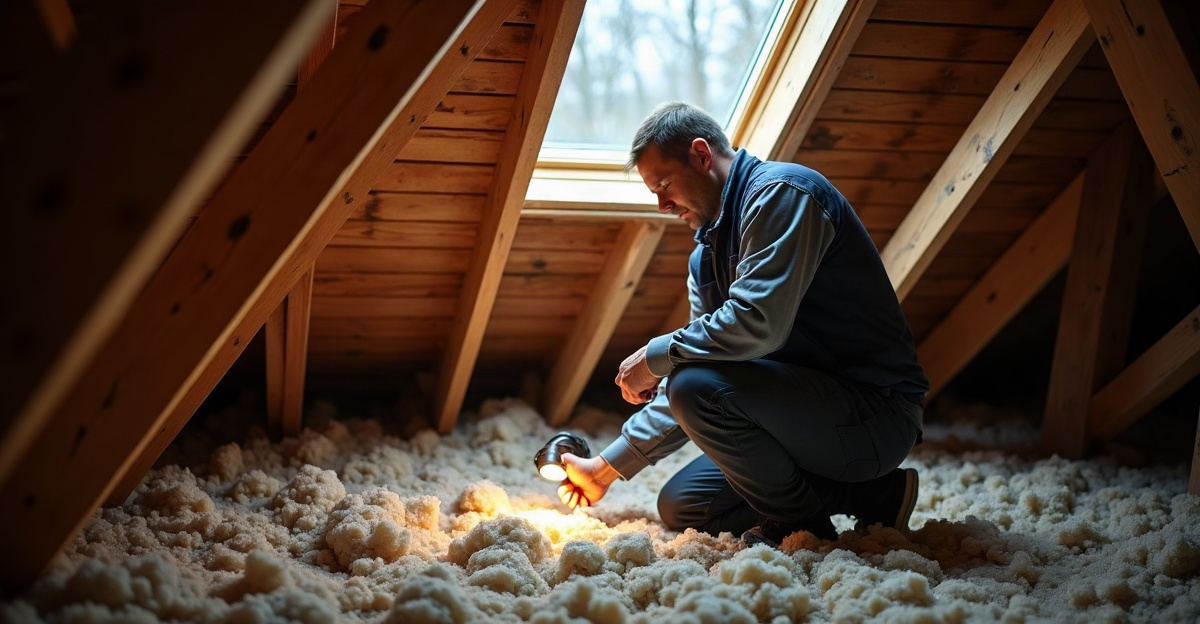
Installation quality directly affects real-world results. Insulation thrown in unevenly or blocked by stored items won’t perform to its potential. We approach attic upgrades as full systems, assessing ventilation, air pathways, and existing material condition before adding new insulation.
Property owners who notice rising utility bills or inconsistent room temperatures may benefit from reviewing the signs a home needs retrofit insulation to determine whether current attic levels meet climate demands.
How Blow-In Insulation Compares to Other Attic Insulation Ideas and When It May Not Be the Best Option
Blow-in insulation performs well in many vented attic applications, but it isn’t the right choice for every project.
Batt insulation uses pre-cut panels installed between joists. If installed carefully, it can perform effectively. However, gaps, compression, and misalignment reduce performance. Those issues are common in aging attics and affect long-term results. Our batt insulation service focuses on precise fitting where this system is appropriate.
Spray foam insulation provides higher R-value per inch and strong air sealing characteristics. It adheres directly to surfaces and can significantly reduce air leakage. That comes at a higher cost and requires different application conditions. For projects requiring strong air sealing at the roof deck level, we may recommend spray foam insulation, especially in unvented attic assemblies.
There are situations where blow-in insulation may not be ideal:
- Active moisture problems or roof leaks.
- Poor attic ventilation that hasn’t been corrected.
- Structural or roofing issues that should be resolved first.
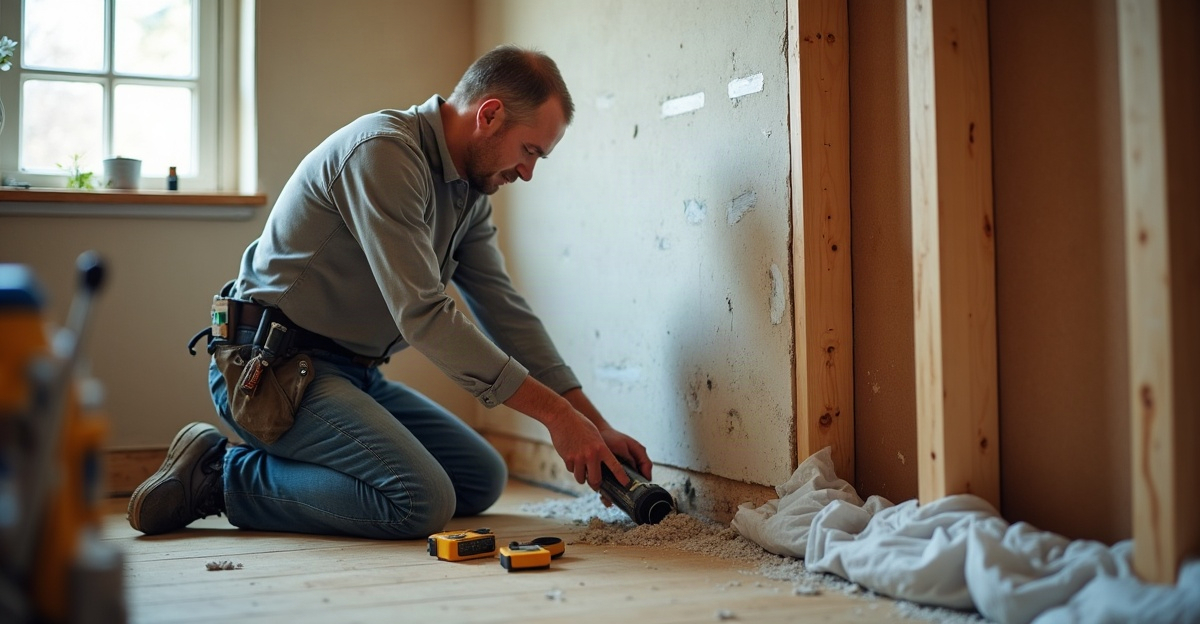
- Closed wall cavities without access points.
Insulation should never compensate for unresolved building problems. Addressing ventilation, moisture control, and structural integrity ensures any insulation system can perform as intended.
Blow-in insulation works well in properly ventilated attics where increasing R-value is the primary goal. It delivers consistent coverage, supports HVAC efficiency, and improves comfort in high-heat climates like Arizona.
A thorough assessment always comes first. Evaluating existing insulation levels, attic conditions, and climate demands helps determine the best path forward. For property owners considering an upgrade, a qualified insulation professional can provide project-specific guidance and explain how different systems align with long-term performance goals.