Best Insulation for New Construction: What Should You Choose?
Choosing the best insulation for new construction in Arizona requires more than meeting code minimums; we align the system with climate zone demands, assembly design, and long-term performance goals. We evaluate vented attics in Phoenix differently than hybrid wall systems in Northern Arizona. The right insulation strategy balances R-value, air sealing, moisture control, and installation quality to deliver reliable results year after year.
Key Takeaways
- Climate zone (2B, 3B, or 4B) should guide insulation design decisions more than labeled R-value alone.
- R-value, air sealing, and thermal bridging control must work together for consistent real-world performance.
- Fiberglass, spray foam, cellulose, and rigid foam each serve different roles based on framing depth, attic design, and budget.
- Hybrid systems often provide the best insulation for new construction by combining air sealing and thermal control strategies.
- Proper detailing and installation quality directly impact durability, energy efficiency, and long-term comfort.
Choosing Insulation in Arizona Starts with Climate, Not Just R-Value
Arizona’s climate drives insulation performance requirements more than any marketing claim or label on a package. In the Phoenix metro and Tucson—primarily IECC Climate Zones 2B and 3B—long cooling seasons, high summer heat, and dry air dominate. In Northern Arizona, including higher elevations in Climate Zone 4B, colder winters add a heavier heating load.
In new construction, insulation choices shape the entire building envelope. Walls, attics, rooflines, rim joists, and transitions between materials all interact. A weak detail in one area can undermine the rest of the system.
Code minimum R-values for Zones 2B, 3B, and 4B set a legal baseline. They are not a performance target. We treat code as the floor, not the goal. The best insulation for new construction often exceeds minimums where it makes practical and financial sense.
Product selection depends on several core factors:
- R-value per inch
- Air sealing capability
- Thermal bridging reduction
- Moisture control strategy
- Durability over time
- Lifecycle cost
- Construction schedule and sequencing
No single insulation works for every build. Climate, framing depth, attic design, mechanical layout, and budget all shape the right choice.
Key Performance Factors Beyond R-Value
R-value measures resistance to heat flow. Higher numbers slow conductive heat transfer. That’s important in Arizona, but R-value alone doesn’t control air movement.
Uncontrolled air leakage can drain performance. Hot outdoor air entering through gaps around top plates, electrical penetrations, or attic hatches increases cooling loads. Materials like spray foam can form an air barrier when properly installed. In other systems, we handle air sealing separately to protect overall performance.
Thermal bridging also affects results. Wood and steel framing conduct heat through the wall assembly. Even with high R-value cavity insulation, studs create pathways for energy loss. Exterior continuous insulation, such as rigid foam board, helps interrupt that flow and improve real-world efficiency.
Moisture management still matters in a dry climate. Monsoon season brings sudden humidity spikes. Interior moisture from showers, cooking, and occupants adds to that load. Proper air control layers and correct material placement help prevent condensation inside wall or roof assemblies.
Installation quality determines whether a product performs as expected. Gaps in batts, compression around wiring, underfilled corners, or poorly mixed spray foam reduce effective R-value. Poorly installed cellulose can settle if density is too low. Foam board exposed to UV too long can degrade before cladding is applied. We focus heavily on detailing because materials alone don’t guarantee outcomes.
Long-term performance depends on stable installation and correct assembly design. The goal is predictable comfort and energy use year after year—not high numbers on paper.
Comparing the Main Insulation Types for New Construction
Side-by-Side Performance Overview
Below is a practical comparison of common insulation types used in Arizona new builds:
- Fiberglass (batts and blown-in): Typically delivers about R-3.0 to R-3.8 per inch. Budget-friendly and widely available. Works well in standard 2×4 or 2×6 wall cavities and vented attics. Requires separate air sealing for best performance. See our breakdown of batt vs. blow-in insulation for detailed differences.
- Spray foam (open-cell and closed-cell): Open-cell offers strong air sealing at a lower cost per inch. Closed-cell provides around R-6 to R-7 per inch and adds rigidity with vapor resistance. Both can create an air barrier when installed correctly. Learn how systems differ in open vs. closed-cell spray foam.
- Cellulose (dense-pack): Installed at high density in wall cavities. Provides solid coverage and sound control. Performance depends on proper installation to avoid settling.
- Rigid foam board: Installed as exterior continuous insulation. Reduces thermal bridging through framing members. Often combined with cavity insulation for high-performance wall assemblies.
Spray foam often enters the conversation when discussing the best insulation for new home construction, especially in unvented attics or where cavity depth is limited. For a broader explanation, we outline the basics in how spray foam insulation works.
Each material has a place. The right system depends on performance goals, structural layout, and budget.
Best Wall Insulation for New Construction
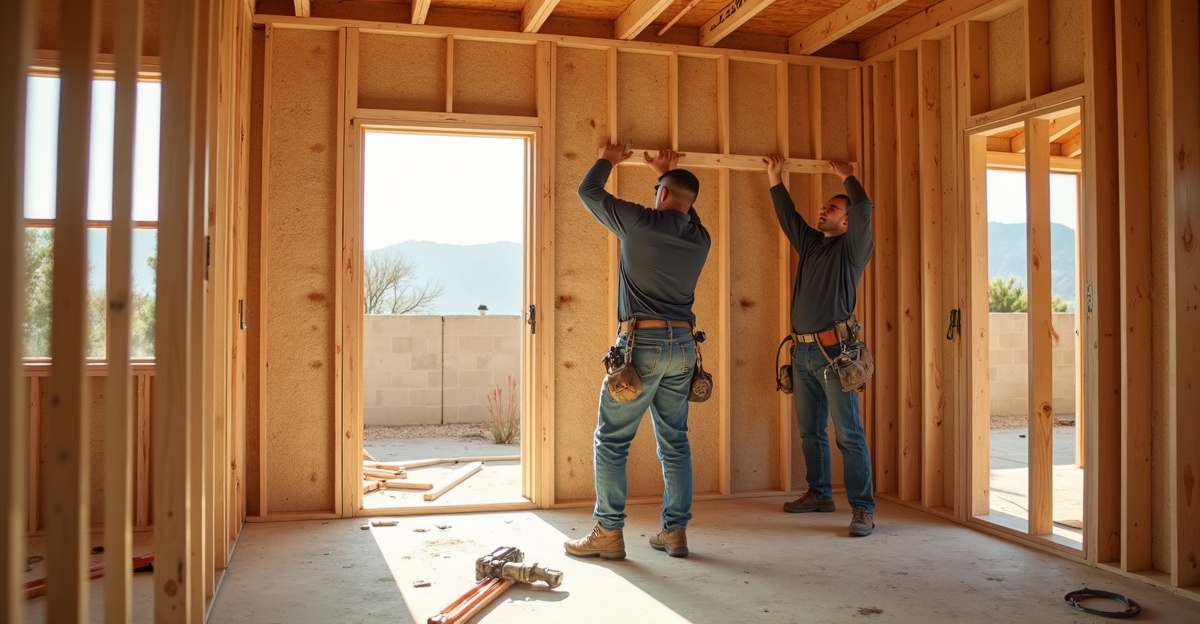
Wall systems vary widely based on framing depth and design goals. A 2×4 wall limits cavity depth, while 2×6 framing allows higher R-values without relying on exterior insulation.
Fiberglass batts remain a cost-effective option for both 2×4 and 2×6 walls. Performance depends on precise installation. Gaps and compression reduce effectiveness. We pair batts with strong air sealing practices to improve overall results. Our batt insulation services focus on clean fits and careful detailing.
Dense-pack cellulose improves air control compared to standard batts. It fills irregular cavities more completely when installed at proper density.
Closed-cell spray foam works well where wall thickness is limited. Higher R-value per inch makes sense in 2×4 framing or areas requiring added moisture resistance. We often recommend wall spray insulation in performance-focused builds.
Exterior rigid foam board adds another layer of control. Installed continuously over sheathing, it reduces thermal bridging and improves overall wall performance.
Hybrid systems are common. We may combine closed-cell spray foam in key areas with fiberglass or cellulose elsewhere. Other projects use cavity insulation plus exterior foam board. The best wall insulation for new construction depends on framing, cladding type, climate zone, and budget. There’s no universal answer.
For additional insight on wall-focused systems, review the benefits of wall spray insulation in new builds.
Attic Insulation Strategies for Arizona New Builds
Attic design plays a major role in Arizona performance. Summer attic temperatures in Phoenix and Tucson can become extreme, especially with traditional vented assemblies.
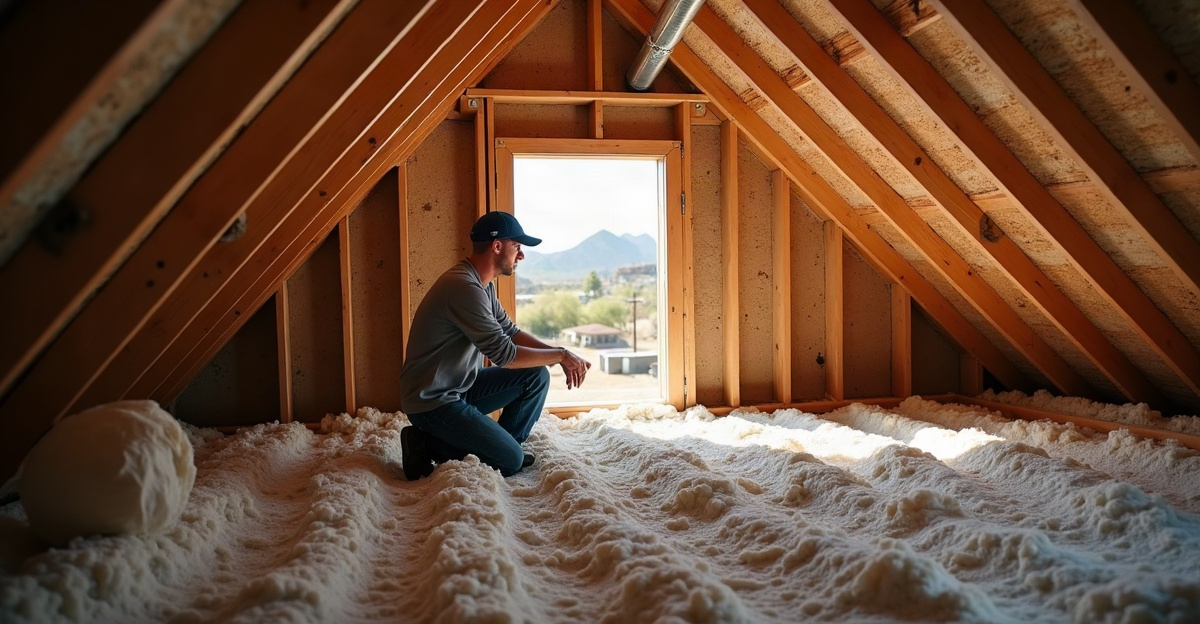
A vented attic with blown-in fiberglass or cellulose offers lower upfront cost. This approach relies on thorough ceiling air sealing at top plates, recessed lighting, bath fans, and mechanical penetrations. Without strong detailing, hot air infiltration can reduce efficiency. Our blown-in insulation services focus on even coverage and correct depth to meet or exceed code.
Conditioned, unvented attics move the thermal boundary to the roof deck. Spray foam applied to the underside of the roof sheathing keeps attic temperatures closer to interior conditions. That approach helps when HVAC equipment or ductwork runs through the attic. Reduced temperature extremes can improve comfort and system performance. We regularly install spray foam insulation for this purpose.
We analyze each plan set carefully. Roof design, HVAC layout, and overall energy targets guide the recommendation. Proper sealing around chases and penetrations remains essential in both strategies.
Cost vs. Long-Term Value and When Each Option Makes Sense
Upfront cost varies significantly by material. Fiberglass systems usually come in lowest. Spray foam and exterior rigid foam increase initial investment. The right decision weighs first cost against long-term comfort, durability, and energy use.
Fiberglass makes sense in budget-focused builds with disciplined air sealing and proper installation. It satisfies code requirements and performs predictably when installed well.
Spray foam is often justified in high-performance homes, unvented attics, or assemblies with limited cavity depth. Many homeowners ask whether it’s worth the premium in our climate. We address that directly in is spray foam worth it in Arizona.
Rigid foam board suits performance-oriented wall systems where reducing thermal bridging is a priority.
Common questions come up during design:
- Is spray foam worth it in Arizona? In many cases, yes—particularly for unvented attics or hybrid wall systems focused on air control.
- What R-value is required for a new Arizona home? IECC Climate Zones 2B, 3B, and 4B establish minimums, but we often recommend exceeding them within reason.
- Can insulation types be combined? Absolutely. Hybrid systems often represent the best insulation for new construction strategies.
- What lasts the longest? Longevity depends on correct installation, moisture management, and protecting materials from damage during construction.
We work with homeowners and builders on new home insulation projects across Arizona. Early coordination during plan review leads to better results and fewer adjustments in the field. Builders can schedule a walkthrough consultation to align specifications with performance goals, and homeowners can request a consultation before insulation is installed.
Clear planning, correct material choice, and disciplined installation produce long-term performance. That’s the standard we apply on every project.