Is Spray Foam Insulation Good? Benefits and Drawbacks

Spray foam insulation works well in many homes, but the right choice depends on air leakage, attic conditions, energy goals, and budget. We see this often in Arizona, where extreme heat and ductwork in unconditioned attics push HVAC systems hard. Spray foam combines insulation and air sealing in one application. That combo cuts energy loss and improves comfort. Higher upfront costs and the need for skilled installation mean it fits some homes better than others.
Key Takeaways
- Spray foam provides both insulation and air sealing, helping reduce energy loss that can account for up to 30% of a home’s inefficiency.
- Open-cell and closed-cell foam serve different purposes, with closed-cell offering higher R-value per inch and added moisture resistance.
- Arizona homes with hot attics, high cooling bills, ductwork in attic spaces, or uneven temperatures often see the most benefit.
- Higher upfront costs and the requirement for skilled installation are the main trade-offs compared to fiberglass.
- Spray foam makes the most sense when long-term energy performance and comfort outweigh the lowest initial cost.
A Clear Answer: Is Spray Foam Insulation a Smart Choice for Arizona Homes?
Is spray foam insulation good? The honest answer is: it depends. The right choice comes down to the property type, Arizona’s climate conditions, insulation goals, and budget.
Spray foam delivers strong air sealing and high thermal performance. It also costs more upfront and requires professional installation. For some homes, it’s a smart long-term investment. For others, traditional options may be sufficient.
Homeowners who benefit most typically deal with:
- High summer energy bills
- Extremely hot attics
- Ductwork located in unconditioned attic spaces
- Uneven indoor temperatures
- Older homes with noticeable air leakage
For those scenarios, spray foam can make a measurable impact. Still, it isn’t a cure-all. Results depend on choosing the right product—open-cell or closed-cell—and installing it correctly.
Many homeowners ask how good is spray foam insulation compared to other materials. Others wonder, is spray foam good insulation, or is spray foam insulation a good idea for every home? The answer always circles back to long-term performance goals. If the priority is lower upfront cost, fiberglass may win. If the priority is air sealing, efficiency, and comfort over time, spray foam often stands out.
Understanding how spray foam insulation works helps clarify why it performs differently from traditional products.
How Spray Foam Insulation Works in Real-World Conditions
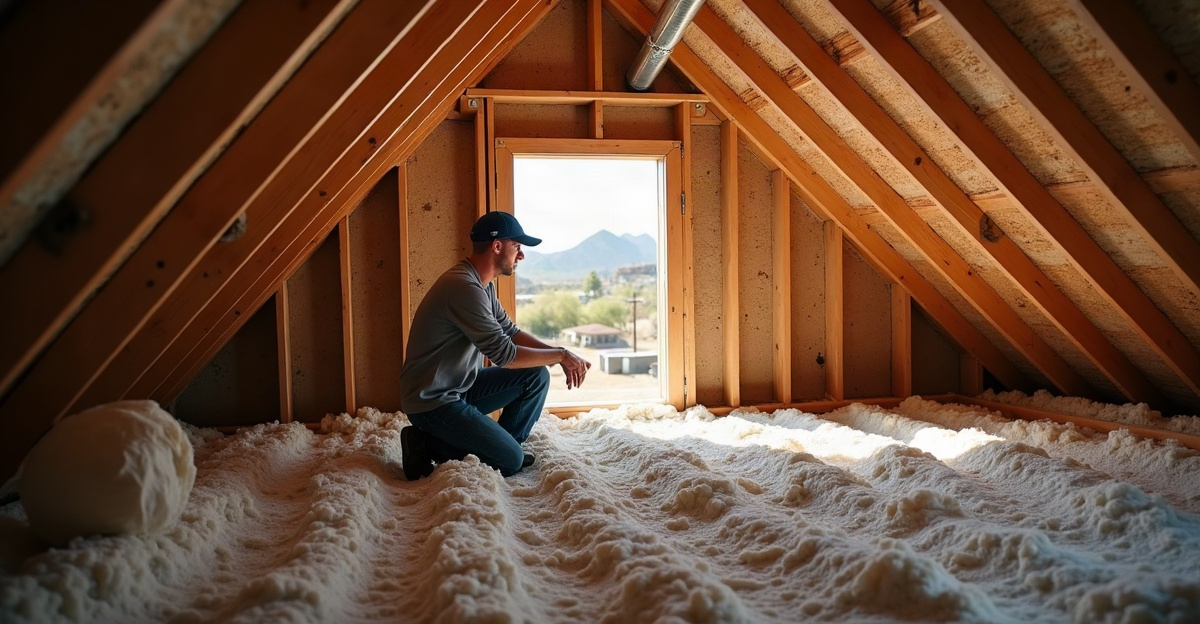
Spray foam is applied as a liquid that expands and hardens in place. It fills cracks, gaps, and cavities, creating both insulation and an air seal in one step. That dual function is what separates it from fiberglass and cellulose.
Traditional insulation slows heat transfer. Spray foam slows heat transfer and blocks air movement.
According to the U.S. Department of Energy, up to 30% of a home’s energy can be lost through air leakage. Spray foam directly addresses that loss by sealing penetrations around framing, wiring, ducts, and roof decking.
Performance varies by foam type:
- Open-cell spray foam: approximately R-3.5 to R-3.8 per inch
- Closed-cell spray foam: approximately R-6 to R-7 per inch
R-value measures resistance to heat flow. Higher numbers mean stronger performance per inch. Closed-cell foam delivers more insulation in thinner applications, while open-cell foam expands more and fills cavities effectively.
In Arizona, this matters. Attics regularly reach extreme temperatures. Many homes have HVAC equipment and ductwork in those attic spaces. When air leaks surround that system, the unit works harder and runs longer. Spray foam helps limit that heat intrusion.
Unlike fiberglass, which allows air to move through and around it, spray foam reduces airflow. That improves temperature consistency, supports HVAC efficiency, and reduces strain on mechanical systems.
Open-Cell vs. Closed-Cell Spray Foam: Key Differences and Use Cases
Choosing between open-cell and closed-cell foam isn’t a minor detail. The wrong choice can reduce performance and limit long-term value.
Those comparing materials in depth can review this breakdown of open-cell vs. closed-cell spray foam insulation for technical distinctions. At a practical level, here’s what matters.
Open-cell foam is softer and lighter. It expands significantly during application, which makes it useful for:
- Interior wall cavities
- Attic encapsulation projects
- Areas where sound control is beneficial
Closed-cell foam is denser and delivers a higher R-value per inch. It also acts as a vapor retarder and can add structural rigidity to the building assembly. That makes it better suited for:
- Crawl spaces
- Exterior wall assemblies
- Areas needing added moisture resistance
- Applications with limited cavity depth
Both types work well in new construction and retrofit upgrades. Closed-cell is often preferred where moisture control and maximum thermal resistance per inch are priorities. Open-cell can be effective in interior applications where flexibility and expansion are advantageous.
Installation quality matters just as much as product choice. Improper mixing ratios, incomplete curing, or poor coverage can create gaps or long-term performance issues. Spray foam is not a forgiving material. It requires trained applicators and careful attention to ventilation during installation.
Benefits That Matter Most in Arizona’s Desert Climate
Arizona homes operate in extreme conditions. Long cooling seasons, intense solar heat, and heavy HVAC usage amplify any weakness in the building envelope.
Strong air sealing reduces heat infiltration. That directly lowers HVAC strain and supports better indoor comfort. Many homeowners report fewer hot spots and more stable indoor temperatures after proper spray foam installation.
Energy savings vary by home. Results depend on current insulation levels and existing air leakage. Still, addressing up to 30% potential energy loss through air leakage, as cited by the U.S. Department of Energy, can produce noticeable efficiency improvements.
Durability is another advantage. Spray foam does not sag or settle over time the way some traditional materials can. Once cured, it remains in place. For homeowners evaluating longevity, this article on how long spray foam insulation lasts outlines what to expect over the life of the home.
Moisture control also plays a role. During monsoon season, tightly sealed homes need balanced ventilation. Closed-cell foam in particular can help manage vapor movement in specific assemblies.
When ducts are brought into a conditioned attic space through encapsulation, spray foam can significantly improve system performance. Cooling equipment no longer operates in extreme attic heat, which reduces workload and improves consistency.
The result isn’t exaggerated savings. The real benefits are better comfort, improved efficiency, reduced strain on equipment, and stable long-term performance.
Drawbacks and Trade-Offs to Consider Before Choosing Spray Foam
Spray foam carries a higher upfront cost than fiberglass or blow-in insulation. That alone makes it impractical for some projects.
Professional installation is required. This is not typically a DIY-friendly product. Proper mixing, temperature control, and substrate preparation are essential. Off-ratio foam or poor spraying technique can lead to odor issues, improper curing, or reduced performance.
Removal also presents challenges. Once cured, spray foam adheres firmly to surfaces. Modifying electrical or plumbing systems later can require cutting and patching.
In some homes, spray foam may be unnecessary. If existing insulation performs well and air leakage is minimal, upgrading may offer limited return. Budget-driven renovations may prioritize other improvements first.
A balanced evaluation matters. Higher initial investment should align with long-term performance gains. We recommend reviewing the home’s energy usage, comfort concerns, and overall building condition before selecting any insulation type.
Cost, Comparisons, and When Spray Foam Makes Sense
Spray foam generally costs more per square foot than fiberglass. That’s the trade-off for combining air sealing and insulation in a single application. In many cases, reduced energy loss and improved HVAC efficiency offset part of that investment over time.
Compared side by side:
- Spray foam: Higher upfront cost, strong air sealing, higher R-value per inch (especially closed-cell), long-term durability.
- Fiberglass: Lower initial cost, reasonable thermal resistance, does not provide air sealing.
Fiberglass remains a practical option for budget-conscious projects. Spray foam often makes more sense where performance gaps exist.
Situations where spray foam is a good idea include:
- Homes with consistently high cooling bills
- Significant air leakage issues
- Attic encapsulation projects
- New construction targeting higher energy performance
Scenarios where it may not be ideal:
- Tight renovation budgets
- Projects where existing insulation already performs adequately
Should Spray Foam Be Considered?
- Are energy bills unusually high?
- Is the attic extremely hot?
- Are there comfort inconsistencies between rooms?
- Is long-term performance more important than the lowest initial cost?
If several answers are yes, spray foam deserves serious consideration.
For Arizona homeowners weighing options, we provide clear assessments through our spray foam insulation services. We also install fiberglass, blow-in, and batt systems when those make more sense. The goal is long-term performance, not pushing a single product.
Those still comparing insulation types can review the best insulation for Arizona homes for broader context. Each home performs differently. The right solution fits the structure, the climate, and the homeowner’s priorities.