Benefits of Wall Spray Insulation for New Homes
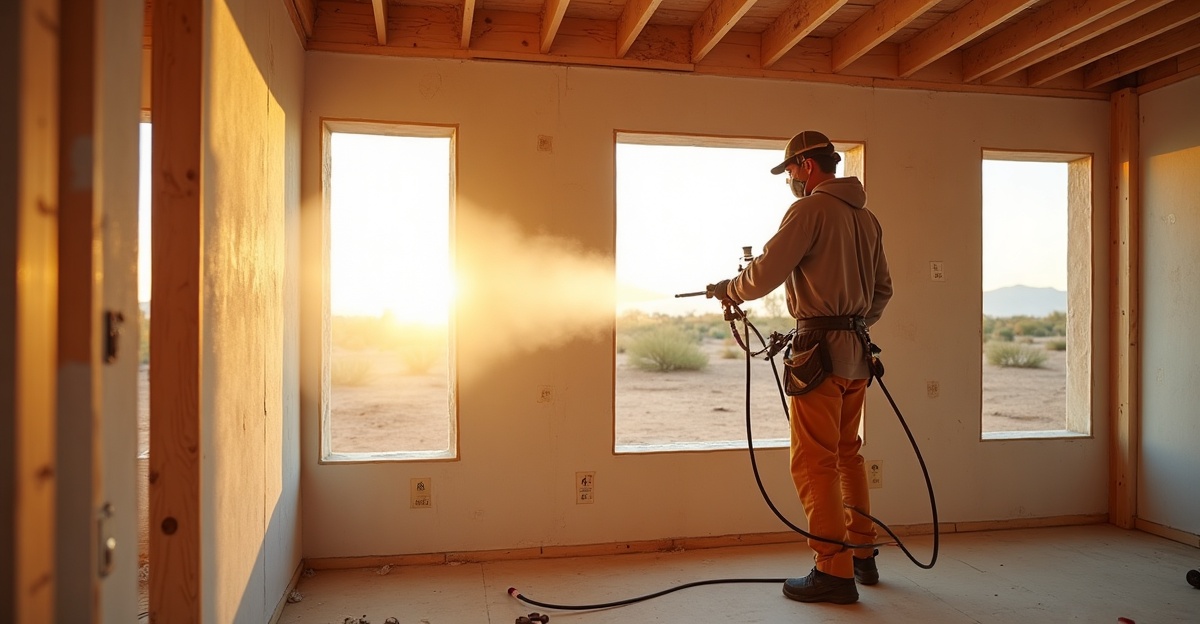
Wall spray insulation plays a critical role in how new Arizona homes perform against extreme heat and sharp temperature swings. We see intense solar gain drive up cooling demand and strain HVAC systems across the state. Spray insulation expands inside wall cavities, cuts air leakage, improves thermal performance, and supports moisture control. When we install it correctly, we create steady indoor comfort, strong energy efficiency, and long-term durability.
Key Takeaways
- We reduce cooling loads by limiting air leakage and fully covering wall cavities in high-heat conditions.
- We support consistent indoor temperatures by combining high R-value performance with built-in air sealing.
- We help limit dust infiltration and drafts by sealing gaps around framing, wiring, and wall penetrations.
- We contribute to moisture control and lower condensation risk through correct product selection and installation methods.
- We protect long-term performance because spray foam adheres to framing and sheathing and resists settling over time.
Lower Energy Costs and Greater Comfort in Arizona’s Extreme Heat
Arizona homes face intense summer heat, high solar gain, and sharp temperature swings between day and night. Those conditions place heavy demand on cooling systems. Strong wall spray insulation benefits start with controlling that heat at the exterior walls.
Spray foam expands inside wall cavity insulation spaces and adheres to framing and sheathing. That expansion helps reduce unwanted air movement through small cracks and gaps that traditional materials can miss. By limiting that airflow, interior temperatures stay more stable and predictable even when outdoor conditions fluctuate.
Cooling costs often rise in homes with uneven insulation coverage or air leaks. Air conditioners cycle longer and harder to keep up. By improving wall performance, spray insulation reduces the load on HVAC equipment. That can mean fewer temperature swings, less strain on equipment, and more consistent day-to-day comfort.
Energy savings vary by home design, orientation, window performance, and overall building envelope quality. Installation quality also plays a major role. We focus on full cavity coverage and detailed air sealing so the insulation performs the way the design intends. For homeowners planning new construction, our wall spray insulation services align well with high-performance building goals.
Anyone researching options can start with a practical spray wall insulation guide to understand how the material behaves once installed. Clear expectations and proper planning lead to better long-term outcomes.
Air Sealing vs. R-Value: Why Performance Is More Than Just a Number
R-value measures resistance to heat flow. Higher numbers indicate greater resistance. That number matters, but it is only part of the equation.
Air sealing addresses something different. It limits unintended air movement through wall cavities, joints, and penetrations. Even insulation with a solid R-value can underperform if air moves freely around or through it.
Spray wall insulation helps address both concerns. Once applied, it expands to fill irregularities in framing cavities. That continuous contact helps reduce thermal bridging at small gaps and limits infiltration at seams and penetrations. Fiberglass batts, by contrast, rely on precise cutting and fitting. If batts are compressed, misaligned, or leave gaps along studs or wiring, real-world performance drops.
We often compare spray foam with traditional materials in our discussion of open cell vs closed cell spray foam insulation. Each option has different density and performance characteristics, yet both offer air sealing advantages over standard batts when properly installed.
The result in a new home is practical and noticeable in daily living. A tighter building envelope leads to fewer hot spots along exterior walls and steadier room-to-room comfort. Instead of chasing a single number, we focus on full-system performance.
How Spray Insulation Improves Indoor Air Quality, Dust Control, and Noise Reduction
Arizona’s dry climate and frequent winds carry fine dust. In homes with air leaks, that dust can enter through wall cavities, electrical penetrations, and framing gaps. Over time, it contributes to buildup on surfaces and within mechanical systems.
Improved air sealing helps limit that infiltration. By sealing cracks and gaps inside the wall cavity insulation layer, spray foam reduces the pathways where outside air—and the dust it carries—can enter. That contributes to cleaner interiors and supports better HVAC performance.
Drafts are another common issue in new construction when sealing details fall short. Air leakage along exterior walls can create cool or warm streaks that make rooms feel uneven. Spray insulation reduces those drafts by forming a continuous barrier along the inside of the cavity.
Acoustically, denser insulation and a fully filled cavity help reduce sound transfer. Exterior noise from traffic or neighborhood activity becomes less noticeable. Interior noise transmission between rooms can also decrease. Those benefits add up over years of occupancy and improve everyday livability, not just short-term impressions.
Moisture Management, Code Compliance, and Long-Term Durability
Arizona is known for dry heat, yet seasonal monsoons bring periods of high humidity. Localized moisture exposure from plumbing, roof leaks, or flashing issues can also affect wall assemblies. Controlling humid air movement inside walls remains important for long-term structural integrity.
Properly installed spray insulation helps limit condensation risk by reducing the flow of moist air into cooler wall components. By sealing the cavity, it minimizes opportunities for humid air to contact surfaces where condensation could occur. Good design, correct material selection, and skilled installation all matter.
New construction must meet local building codes for insulation levels and fire safety. We coordinate with builders to ensure assemblies align with current Arizona requirements without overcomplicating the process. Clear documentation and consistent installation standards keep projects on schedule while maintaining code compliance.
Durability is another factor. Spray insulation adheres to framing and sheathing and does not settle over time like some loose-fill products. Performance remains stable when installed correctly. Homeowners planning long-term occupancy often review how long spray foam insulation lasts to understand lifecycle expectations.
Preparation also plays a role. Clean, dry cavities and proper substrate temperature are essential. Experienced crews who understand sequencing with other trades help deliver dependable results that stand up over decades.
How Spray Wall Insulation Compares to Fiberglass and Other Wall Cavity Insulation Options
Multiple wall cavity insulation options exist for new homes. Each has strengths and trade-offs.
Spray insulation stands out for:
- Integrated air sealing within the cavity
- Custom expansion to irregular framing spaces
- Consistent contact with sheathing and studs
- Improved comfort continuity across exterior walls
Fiberglass batts remain common because of lower upfront cost and straightforward installation. However, gaps, compression, or misalignment can reduce performance. Blown-in systems can provide good coverage in some applications, yet they depend heavily on proper density and containment.
We outline broader differences in our comparison of batt insulation vs blow-in insulation. That discussion helps builders and homeowners evaluate options based on budget and performance targets.
Spray insulation typically carries a higher initial cost. Project scope, framing depth, and design goals influence whether full spray, hybrid systems, or traditional batts make sense. For performance-driven new construction and planned home insulation upgrades, spray often aligns well with long-term comfort priorities.
We approach each build with a practical mindset. Spray insulation is not the only viable choice, yet it can deliver stronger overall wall performance when installed correctly and paired with a well-designed building envelope.
Is Wall Spray Insulation the Right Fit for Your New Home?
Homeowners and builders regularly evaluate whether spray insulation makes sense in Arizona. For many projects, the answer depends on goals, climate demands, and budget.
Some ask if it’s worth it in this climate. We address that directly in our article on spray foam insulation in Arizona, where we break down climate factors and performance considerations. In hot, dry regions with high cooling demand, improved air sealing often delivers meaningful comfort benefits.
Comparisons with fiberglass usually center on real-world performance. Spray insulation generally offers stronger air control and more uniform cavity coverage. Batts can perform well if precisely installed and carefully detailed.
Questions about noise and dust control are also common. By limiting air leakage and fully filling cavities, spray insulation can help reduce infiltration and moderate sound transmission. While insulation alone does not solve every indoor air quality issue, it plays a significant supporting role.
Budget constraints can influence decisions. In projects with tight cost limits, a hybrid approach or quality batt system may be appropriate. Complex wall assemblies or unique design features may also require alternative strategies.
We focus on straightforward recommendations and quality workmanship. Clear communication and disciplined installation practices guide every project. Homeowners planning new construction can review our full range of insulation services or reach out through our project consultation page to evaluate the best insulation strategy for their specific build.