Best Wall Insulation for Heat: Top Options for Arizona Homes
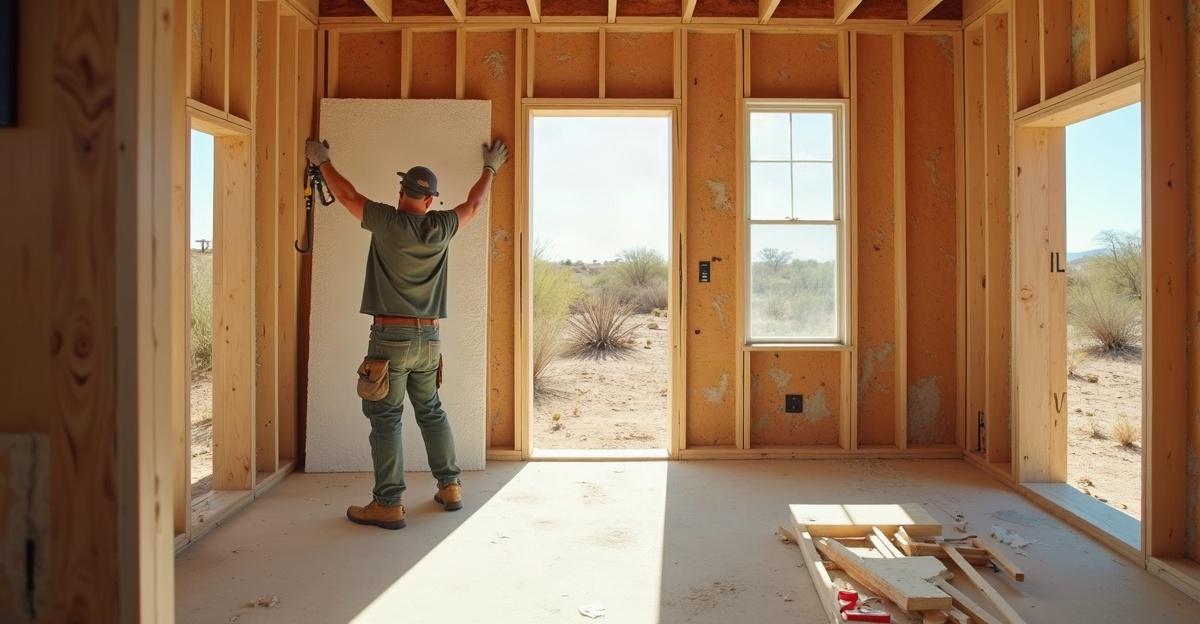
The best wall insulation for Arizona heat depends on the wall assembly, cavity access, available depth, air leakage, moisture conditions, and project type. We often recommend closed-cell spray foam, rigid exterior foam, or properly installed fiberglass, cellulose, and mineral wool. Each option can limit heat gain when it matches the climate, framing, and installation needs.
Key Takeaways
- Closed-cell spray foam delivers high R-value per inch and strong air sealing in open walls with limited cavity depth.
- Rigid foam board adds effective continuous exterior insulation during new construction, re-siding, or major renovations.
- Fiberglass, cellulose, and mineral wool offer practical value when installers seal air leaks and prevent gaps, compression, and incomplete cavity coverage.
- R-value alone doesn’t define wall performance. Air sealing, thermal bridging, solar exposure, and installation quality also influence comfort.
- Existing closed walls may accept dense-pack cellulose or injection foam if cavity conditions, access, wiring, and obstructions permit installation.
The Best Choice Depends on the Wall Assembly, Not One Product
There is no universal best wall insulation for heat. The right material depends on the wall type, whether cavities are open or closed, available depth, air leakage, moisture conditions, budget, and whether we’re working on new construction or a retrofit.
For Arizona homes and light commercial buildings, wall insulation should reduce heat gain and support comfortable indoor conditions based on real wall performance, not R-value alone. Closed-cell spray foam often works well where space is tight and air sealing matters. Rigid foam board can perform well as continuous exterior insulation during construction or re-siding. Fiberglass, cellulose, and mineral wool remain practical cavity options when we include a clear air-sealing plan.
The answer to what is the best wall insulation for heat also depends on the complete building envelope. HVAC condition and sizing, attic insulation, duct location, windows, shading, roof design, air leakage, occupancy, and solar orientation all affect results. A well-selected heat insulation for wall assemblies can reduce heat gain when properly designed and installed, but insulation alone can’t correct every comfort issue.
For a broader look at materials used locally, see our guide to Arizona home insulation options.
Wall Insulation Options Compared for Arizona Heat
| Insulation type | Relative insulating performance | Air-sealing capability | Best use cases | Open walls vs. closed-wall retrofits | Space efficiency | Key limitations or installation considerations |
|---|---|---|---|---|---|---|
| Closed-cell spray foam | High per inch | Can function as an air barrier at appropriate thickness | Limited-depth cavities and air-leakage concerns | Best for open walls; limited retrofit uses depend on access | High | Requires trained installation, correct thickness, substrate preparation, ventilation, and assembly planning |
| Open-cell spray foam | Moderate per inch | Can air seal at sufficient thickness | Accessible open cavities with suitable wall design | Best for open walls | Moderate | Has different moisture and thermal characteristics than closed-cell foam |
| Fiberglass batts or blown-in fiberglass | Moderate | Needs separate air sealing | Cost-conscious open-cavity projects | Suitable for open walls; some blown-in approaches may suit specific retrofits | Moderate | Gaps, compression, and incomplete coverage reduce performance |
| Dense-pack cellulose | Moderate | Needs separate air sealing | Existing enclosed cavities where access allows | Commonly considered for closed-wall retrofits | Moderate | Wiring, plumbing, fire blocking, and existing insulation can affect feasibility |
| Mineral wool batts | Moderate | Needs separate air sealing | Open-wall projects with moisture and fire-resistance considerations | Best for open walls | Moderate | Needs full cavity coverage and properly detailed air barriers |
| Rigid foam board | High per inch | Can support air-control layers when detailed correctly | Exterior continuous insulation, re-siding, and major renovations | Best at exterior wall access | High | Requires careful detailing at windows, doors, cladding, and moisture-control layers |
| Injection foam | Varies by product and wall conditions | Varies | Some enclosed existing walls without drywall removal | Potential closed-wall retrofit option | Moderate | Wall construction, obstructions, and access determine suitability |
Closed-cell foam is often the strongest heat insulation foam for wall cavities where limited depth makes every inch count. It can also provide insulation and air-barrier performance when we install it correctly. Our spray foam insulation service helps evaluate whether foam fits the wall assembly rather than assuming it fits every project.
Open-cell foam can also air seal, but it offers lower insulating performance per inch and handles moisture differently. Review the key differences in our open-cell vs. closed-cell foam comparison.
Which Wall Insulation Works Best for Your Project?
Open Stud Walls and New Construction
For open stud walls, closed-cell spray foam is a strong choice when high insulating performance per inch and integrated air sealing are priorities. Open-cell foam can fit projects where air sealing is needed and the wall assembly accommodates its moisture characteristics.
Fiberglass, cellulose, and mineral wool can also provide reliable wall insulation for heat. They work best when cavity depth supports the target insulation level and we separately seal penetrations, framing transitions, top plates, bottom plates, seams, and openings. Our wall spray insulation work is especially useful for new builds that need consistent cavity coverage.
Continuous exterior insulation deserves consideration in higher-performing walls, particularly with metal framing. It can reduce thermal bridging through studs and support a more effective overall wall system.
Existing Closed Walls and Remodels
Dense-pack cellulose or injection foam may work in enclosed walls without removing drywall, but conditions inside the cavity control the decision. Existing walls can contain old insulation, wiring, plumbing, fire blocking, or other obstructions that limit access and coverage.
During a major remodel, opening the wall provides the clearest opportunity to add insulation, seal air leaks, inspect framing, and address repairs. During re-siding, exterior rigid foam may be worth evaluating because it can add continuous insulation over framing.
For budget-conscious projects, fiberglass batts or blown-in fiberglass can be practical when we install them carefully and complete separate air sealing. Dense-pack cellulose may also be a useful retrofit option where cavity conditions allow. Explore our retrofit insulation services for existing-home options.
Why Arizona Walls Need More Than R-Value
Arizona walls face intense sun, long cooling seasons, hot exterior surfaces, and daily temperature swings. Conditions also vary across the state. Phoenix and Tucson have lower-desert heat exposure, while Flagstaff and other higher-elevation communities experience different temperature patterns. Local climate, elevation, solar exposure, and construction type should guide insulation decisions.
R-value measures resistance to conductive heat flow. It matters, but it doesn’t measure all real-world wall performance. Air sealing limits unwanted air movement that can affect comfort and cooling demand. Thermal bridging occurs when heat travels through framing members, such as wood or metal studs, around cavity insulation.
Radiant heat acts differently from conductive heat. Radiant barriers may have a place in specific assemblies with an adjacent air space, but they don’t replace insulation or air sealing. Continuous exterior insulation can help limit thermal bridging, especially during new construction or major exterior renovation.
This is why a thicker product does not automatically create the best wall insulation for heat. We need to assess the framing, insulation layer, air-control layer, exterior finish, and roof-to-wall transitions as one system.
Air Sealing, Moisture, and Installation Details That Affect Performance
Fiberglass, cellulose, and mineral wool provide insulation, but they generally need a separately detailed air barrier. We seal around electrical penetrations, plumbing, window and door openings, top plates, bottom plates, seams, and wall transitions before relying on cavity insulation.
Installation quality has a direct effect on performance. Gaps, voids, compressed batts, incomplete coverage, and poorly sealed transitions allow heat and air movement around the insulation layer. A product with strong published performance can fall short if the installation leaves defects.
Spray foam can be highly effective when we specify and install it correctly. Proper product selection, substrate conditions, thickness, ventilation, installer training, jobsite safety, and wall-system design all matter. Foam isn’t automatically superior in every assembly, and it should never replace sound moisture-management planning.
Adding exterior foam or changing wall layers can affect how a wall handles moisture and dries over time. We evaluate those details before installation, especially on renovations where existing materials and unknown conditions may be present. For practical material comparisons, see spray foam versus fiberglass.
When to Bring in an Insulation Professional
A professional assessment is worthwhile for persistent hot rooms, suspected air leakage, moisture concerns, inaccessible cavities, uncertain existing insulation, or projects that combine remodeling with HVAC work. We should identify wall type, cavity depth, existing insulation, framing, air-leakage locations, solar exposure, moisture risks, and project access before selecting a material.
What Is the Best Wall Insulation for Heat in Arizona?
Closed-cell spray foam, rigid foam, fiberglass, cellulose, mineral wool, and injection foam can each be the right choice in the proper assembly. The best option matches the wall construction and project conditions.
Is Spray Foam Better Than Fiberglass for Hot Climates?
Spray foam can provide stronger insulating performance per inch and air sealing, while fiberglass can be a cost-effective choice with careful installation and separate air sealing. Neither material is automatically best for every wall.
Can We Insulate Walls Without Removing Drywall?
In some cases, dense-pack cellulose or injection foam may work through limited access points. Wall obstructions and existing conditions determine whether this approach is appropriate.
Does Higher R-Value Always Mean Better Insulation?
No. Air leakage, thermal bridging, installation quality, cavity depth, and moisture design can change real-world results.
What Insulation Is Best for Exterior Walls in a Hot Climate?
Continuous exterior rigid foam can be effective during re-siding or construction because it can reduce thermal bridging. Cavity insulation still needs to fit the complete wall design.
Do Insulated Walls Need Air Sealing Too?
Yes. Insulation and air sealing serve different functions. Most fibrous insulation systems need a separately detailed air barrier.
Is Rigid Foam Insulation Good for Arizona Exterior Walls?
It can be a strong option for exterior applications when we can properly detail windows, doors, cladding, and moisture-control layers.
Arizona property owners, builders, and renovators can request an insulation assessment to review wall insulation options for a specific project. We focus on the complete wall assembly and practical jobsite conditions, so the final recommendation supports lasting performance.