Blow-In Insulation vs Spray Foam: Key Differences
We choose blown-in insulation or spray foam based on more than R-value. Blown-in insulation often suits accessible attic upgrades. Spray foam can reduce air leakage or fit limited cavity space. The best option depends on attic design, existing insulation, duct conditions, moisture control, access, budget, and comfort goals.
Key Takeaways
- Blown-in insulation offers a cost-effective way to increase thermal resistance in accessible attic floors and select wall cavities.
- Spray foam delivers insulation and air-sealing benefits at the correct thickness and in the right building assembly.
- We seal major air leaks before adding blown-in insulation. Loose-fill material cannot replace dedicated air sealing.
- Open-cell and closed-cell spray foam vary in density, R-value, vapor control, and ideal applications.
- Arizona insulation projects require careful attention to attic heat, ductwork, ventilation, roof design, and installation quality.
Quick Takeaway: Which Insulation Approach Fits the Project?
Blow-in insulation is often a cost-conscious way to add R-value in accessible attics and selected enclosed cavities. Spray foam can provide insulation while helping control air leakage where air movement is a major concern.
In a blow-in insulation vs. spray foam comparison, neither option automatically fits every home. We base the right choice on the building assembly, existing conditions, access, moisture strategy, budget, comfort goals, roof and attic design, ventilation plan, and overall project scope.
Arizona homes face extreme summer attic temperatures, intense radiant roof heat, and cooling-dominated energy use. Ductwork often runs through unconditioned attics, which can contribute to hot second floors, uneven room temperatures, and high cooling costs. Older construction, tight roof geometry, and limited attic access can also affect what is practical.
Insulation alone will not solve every cooling or comfort issue. Duct leakage, HVAC sizing and condition, solar gain, windows, roof design, thermal bridging, occupant use, and installation quality all affect the final result.
Blow-In Insulation vs. Spray Foam at a Glance
| Factor | Blow-In Insulation | Spray Foam Insulation |
|---|---|---|
| Primary function | Adds thermal resistance | Adds insulation and can help control air leakage |
| Typical materials | Loose-fill fiberglass or cellulose | Open-cell or closed-cell polyurethane foam |
| R-value per inch | Varies by material and installed density | Generally higher per inch, especially closed-cell foam |
| Air-sealing capability | Can reduce some airflow but does not replace air sealing | Can create an air barrier at appropriate thicknesses |
| Best locations | Accessible attic floors and selected wall cavities | Areas with significant leakage, limited space, or specific assembly needs |
| Retrofit suitability | Often effective for attics and enclosed walls | Often best where access is open or localized treatment is needed |
| Moisture and vapor considerations | Depends on material, assembly, and moisture conditions | Depends on foam type, thickness, roof design, and full assembly |
| Installation requirements | Requires correct depth, coverage, and density where applicable | Requires trained installers, preparation, and controlled application |
| Upfront cost relationship | Often lower for adding attic R-value | Commonly higher for material and labor |
| Common limitations | Does not replace dedicated air sealing | Higher cost and greater installation demands |
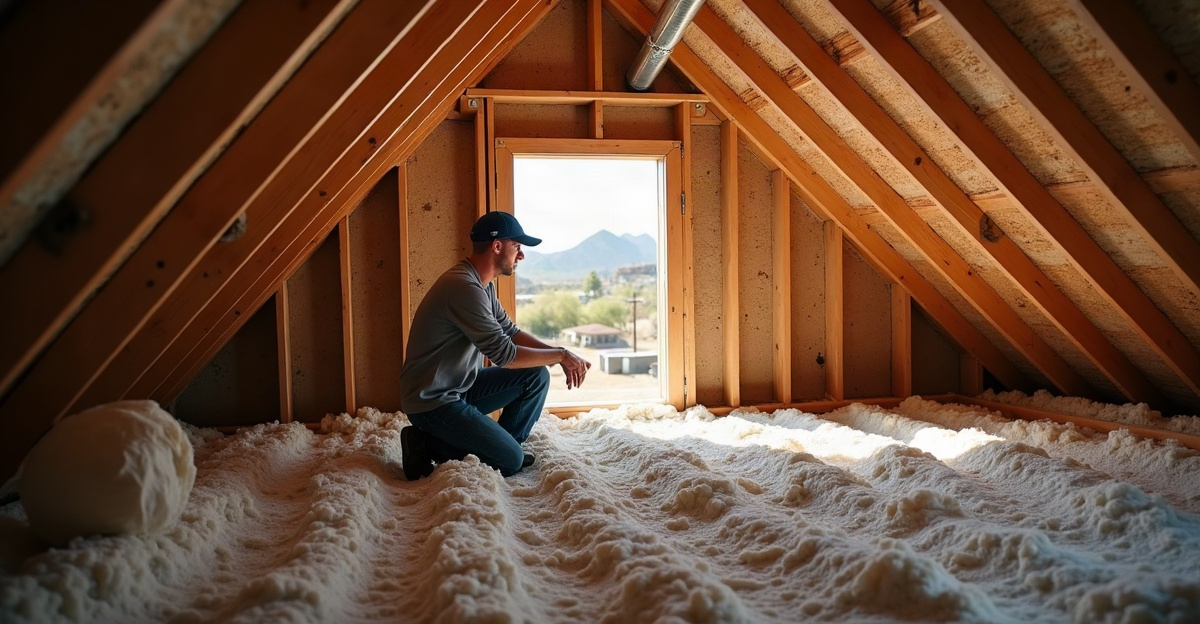
Blow-in insulation typically uses loose-fill fiberglass or cellulose. Its primary job is to add thermal resistance, measured as R-value, which describes resistance to heat flow. Properly installed material can reduce some airflow, but we do not treat it as a substitute for sealing major gaps and penetrations. Blow-in insulation basics explain why it often works well on attic floors and in selected wall cavities.
Spray foam serves a different role. At appropriate thicknesses and with proper installation, it can insulate and help form an air barrier. It may make sense where cavity space is limited, leakage is significant, or the assembly has specific requirements. Our spray foam insulation service addresses these conditions through a project-specific assessment.
R-value matters, but it is not the only performance measure. Air leakage, thermal bridging, duct location, roof design, attic ventilation, moisture control, and workmanship can all materially affect energy use and comfort. For another material comparison, see spray foam versus fiberglass.
Open-Cell and Closed-Cell Spray Foam: Important Differences
Spray foam is not one identical product. Open-cell and closed-cell products differ in density, expansion behavior, R-value, vapor-control characteristics, thickness, and intended use.
Open-cell foam has a lower density and expands substantially after application. It provides insulation and air sealing at appropriate thicknesses, and it is generally more vapor-permeable than closed-cell foam. Its suitability depends on the roof or wall assembly and the full building design.
Closed-cell foam has a higher density, a higher R-value per inch, and greater resistance to vapor diffusion. It may fit areas with limited space or assemblies with particular performance requirements. It also carries a higher material cost, so we do not select it solely because it offers a higher R-value. Our guide to open-cell and closed-cell foam covers the core differences.
Moisture management depends on the complete assembly, local climate, roof design, ventilation, and installation details. Spray foam does not automatically create moisture problems, nor does it remove every moisture concern. We evaluate how the materials work together before recommending a foam type or application method.
Quality installation is essential. Spray foam requires trained installers, proper surface preparation, safe chemical handling, correct thickness and lift application, curing procedures, manufacturer requirements, and applicable code provisions. We review current local conditions and project requirements rather than making broad code claims that may not apply to a specific jurisdiction.
Where Blow-In and Spray Foam Work Best in Arizona Homes
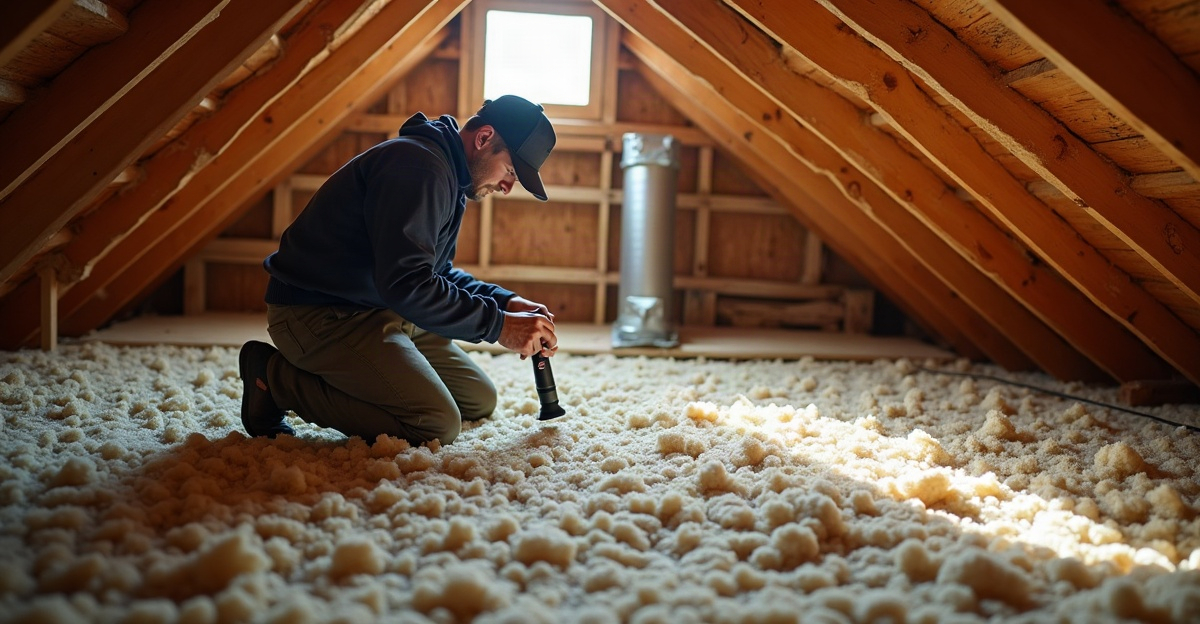
Accessible vented attics often benefit from targeted air sealing followed by blow-in insulation. We address common leakage points before adding loose-fill material, including plumbing and wiring penetrations, top plates, open chases, attic hatches, and properly rated recessed-light fixtures. The installed insulation then needs consistent coverage, correct depth, and proper density where applicable.
Attics with complex penetrations or major leakage may warrant spray foam in selected areas. That decision requires a careful look at the roof, attic ventilation, and full assembly strategy. A conditioned attic is intentionally brought inside the building’s conditioned envelope. It needs a properly planned roof, attic, and ventilation approach.
Existing walls may accept dense-pack or other blow-in methods through drilled access points. Spray foam is often more practical when walls are already open during remodeling. In new construction, we evaluate both options based on cavity depth, air-barrier planning, construction sequencing, budget, and code needs. Our retrofit insulation service helps identify practical options for finished homes.
Ducts in hot Arizona attics deserve close attention. We consider duct sealing, duct insulation, equipment condition, and whether a conditioned or semi-conditioned attic strategy fits the home. Spray foam is not automatically required simply because ducts sit in an unconditioned attic.
Cost, Existing Conditions, and Retrofit Constraints
Spray foam commonly has a higher upfront material and labor cost than blow-in insulation. Blow-in can provide a more affordable path for increasing attic R-value, especially where the attic is accessible and the main need is additional thermal coverage.
Actual cost depends on insulation removal, preparation, access, area size, foam type and thickness, insulation depth, repairs, ventilation work, local labor conditions, and project scope. We avoid fixed pricing or promised utility savings without reviewing the property.
An attic or wall may need preparation before new insulation goes in. Existing material may require removal if it is wet, damaged, contaminated by pests, or otherwise unsuitable to remain. Cleanup, water-damage repairs, mold assessment, ventilation corrections, duct sealing, and air sealing may also be necessary. Our residential insulation services account for these site conditions before installation begins.
Results vary with existing insulation levels, HVAC performance, building leakage, household use, utility rates, roof and attic design, duct condition, and installation quality. We focus on improvements that make sense for the home instead of broad savings claims.
When a Hybrid Insulation Strategy Makes Sense
The best approach is often not an either-or decision. We may air seal an attic floor and add blow-in insulation, use spray foam in difficult localized areas, address ducts and penetrations before insulating, or combine targeted air sealing with the R-value needed for complete coverage.
Project Decision Checklist and Common Questions
We use these practical questions to define the right scope of work:
- Where will insulation go: attic floor, roofline, walls, crawl space, or another cavity?
- Is the main issue low insulation, air leakage, duct losses, or a combination?
- Is existing insulation clean, dry, and suitable to remain?
- Can installers access the area and complete the work properly?
- Are walls or ceilings open during a remodel?
- Are roof, ventilation, moisture, or combustion-safety conditions involved?
- What budget and improvement scope fit the project?
Is Spray Foam Better Than Blow-In Insulation?
No. Spray foam vs. blow-in insulation depends on the location and performance goal. Foam may fit air-leakage control or limited cavities, while blow-in often fits attic R-value upgrades.
Can Blow-In Insulation Stop Air Leaks?
It can reduce some airflow, but it will not replace dedicated air sealing. We seal major leakage paths first whenever access allows.
Is Open-Cell or Closed-Cell Foam Better for an Attic?
Neither is universally better. The correct type depends on the roof assembly, available depth, vapor-control needs, ventilation plan, and project design.
Can We Add Blow-In Over Existing Attic Insulation?
Often, yes, if the existing material is dry, clean, and in suitable condition. We inspect it first and correct underlying issues before covering it.
Do We Need to Remove Old Insulation Before Adding New Material?
Only when it is wet, contaminated, pest-damaged, heavily compressed, or otherwise unsuitable. Removal may also be necessary to complete repairs or air sealing.
Is Spray Foam Worth the Higher Upfront Cost?
It can be worthwhile where its air-sealing role, space efficiency, or assembly benefits address a real project need. It may be unnecessary where air sealing plus blow-in insulation can meet the goal at a lower cost. Review spray foam benefits and drawbacks for additional context.
Should Ducts in an Arizona Attic Be Addressed During an Insulation Upgrade?
Yes. We recommend evaluating duct leakage, insulation, connections, and equipment condition as part of the overall attic plan.
An on-site assessment is the most reliable way to identify insulation levels, air-leakage opportunities, attic and duct conditions, existing-insulation concerns, and the appropriate scope. Need help choosing the right approach for an Arizona home or project? Request an insulation assessment from Tightseal to review the attic, air sealing opportunities, existing insulation, and project goals.